

 Hi Friends! It’s Gus, your local door and window expert! I’m sure you can attest, spring in North Central Texas is a bit of a mixed blessing. The wildflowers show off (Hello Bluebonnets), the weather mostly behaves (pop up storms and hail), and everyone suddenly remembers they have a backyard… but then the pollen hits—and it hits hard.
Around Granbury and the surrounding areas, spring pollen isn’t just an outdoor nuisance. It has a sneaky way of making itself at home inside your home too.
Let’s talk about it.
Outside: The Yellow Dust You Can’t Escape
Show of hands if you’ve ever walked out to your car in the spring and thought, “Was my car always this color?”—that’s pollen season in full swing.
North Central Texas is loaded with pollen producers like:
- Oak trees
- Cedar/Juniper
- Grasses (once things really warm up)
On breezy days, pollen doesn’t just fall—it travels. It rides the wind, so… much… wind… It settles on every surface, and somehow ends up exactly where you don’t want it – in your house!
How It Gets Inside (Even When You’re Careful)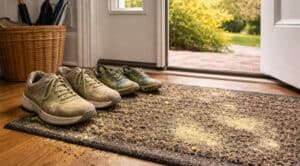
Most people assume pollen only comes in when doors or windows are open. That’s part of it—but not the whole story. So, even if you’re keeping things closed up, your home might not be as sealed as you think.
Pollen is incredibly fine, and it can sneak in through:
- Tiny gaps around older windows and doors
- Worn-out seals
- Air leaks you didn’t even know existed
- Shoes, clothes, and pets (yes, your dog is basically a pollen delivery system)
Inside: Where It Really Becomes a Problem
Once pollen gets indoors, it doesn’t just politely sit in a corner. It circulates.
Your HVAC system can pull it through the house, landing it on:
- Furniture
- Bedding
- Floors
- Curtains
Which means the place you’re supposed to get relief—your home—can actually keep your allergies going. If you’ve ever thought, “Why am I still sneezing inside?”… this is likely why.
Signs Pollen Is Sneaking Indoors
Not all pollen problems are obvious. Here are a few subtle clues:
- You dust… and then it looks like you didn’t
- Allergy symptoms don’t improve indoors
- You notice buildup on window sills or near vents
- Your home feels stuffy, even with the AC running
It’s not just cleanliness—it’s infiltration.
What Your Windows Have to Do With It
Windows play a bigger role than most people realize.
Older or poorly sealed windows can:
- Let outside air (and pollen) leak in
- Struggle to keep a consistent indoor environment
- Put more strain on your HVAC system
Modern, well-sealed windows help create a tighter barrier between your home and everything floating around outside.
Think of it as upgrading from a screen door to a real shield.
Simple Ways to Reduce Indoor Pollen
You don’t have to go full “bubble house,” but a few smart habits help:
- Change HVAC filters regularly (especially in spring)
- Wipe down surfaces more frequently during peak pollen weeks
- Leave shoes at the door
- Keep windows closed on high-pollen days
- Check for drafts or air leaks around windows
And if your windows are older, it may be worth taking a closer look—because no amount of cleaning can fully solve a sealing problem.
Final Thought
Spring in North Central Texas is meant to be enjoyed—patios, fresh air, longer days. But when pollen follows you inside, it takes some of the fun with it.
The goal isn’t to avoid spring—it’s to enjoy it without bringing all of it indoors.
And sometimes, the difference between “allergy season” and “actually enjoying your home” comes down to how well your home is sealed from the outside world.
If you think your pollen problem is starting at your windows, give us a call 817-279-1066. We are happy to send a trained salesperson to your home to check out your situation, discuss your options and give you a free estimate. We look forward to partnering with your on your window or door project soon.
For more information regarding allergens and how to protect yourself, visit American College of Allergy, Asthma and Immunology.


